
Recurring pinhole leaks
One leak can be bad luck. A pattern of small leaks in copper lines usually means the pipe is wearing out throughout the house.
Repiping Services
When the pipes themselves are the problem, patching leaks one at a time stops making sense. Tier One plans and installs repipes carefully, with clean routing and quality materials, and keeps you informed from the first walkthrough to the final inspection.
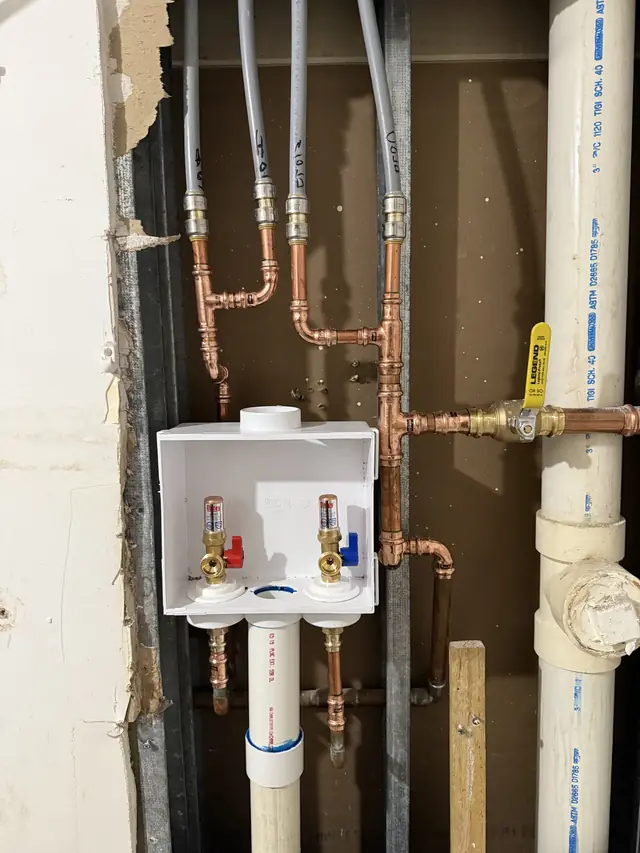
A repipe replaces a home’s water supply piping: all of it in a whole-home repipe, or a specific section in a partial repipe. It’s a significant project, so it should be planned carefully and explained clearly.
Before we recommend a repipe, we look at what you have: the pipe material, its age and condition, where it runs, and the history of leaks. Sometimes a targeted repair or a partial reroute solves the problem. When the whole system is failing, a repipe is usually the more economical long-term fix.
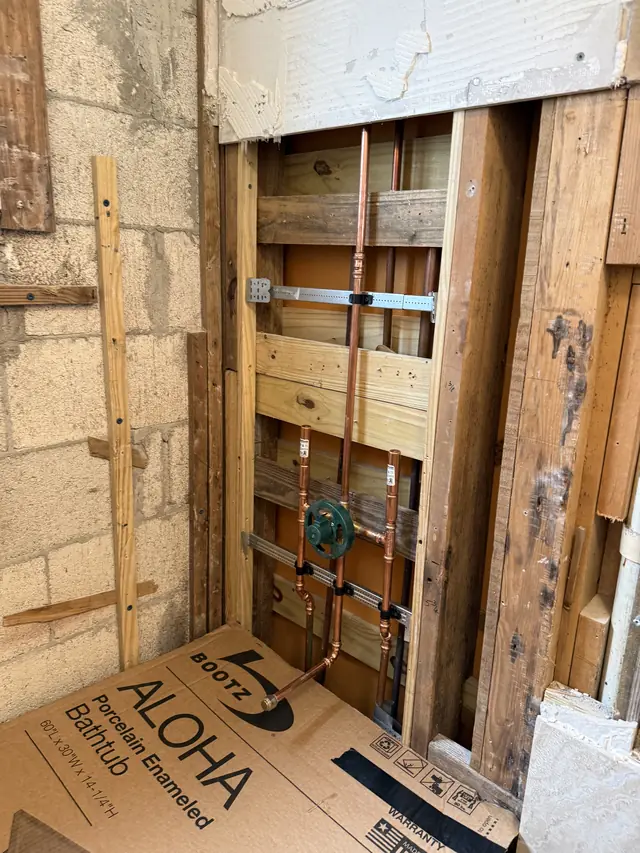
Every repipe starts with a plan for routing the new lines, where openings in walls or ceilings will be needed, and how the work will be sequenced so your home stays as livable as possible.
Common Reasons to Repipe
One leak can be bad luck. A pattern of small leaks in copper lines usually means the pipe is wearing out throughout the house.
Older galvanized pipe corrodes from the inside, which reduces water pressure and can cause rusty or discolored water.
Gray plastic polybutylene supply pipe, common in homes from roughly the late 1970s to the mid-1990s, is known for unexpected failures.
When pressure is poor throughout the house, not just at one faucet, restricted or corroded piping is a common cause.
In slab-on-grade homes, rerouting supply lines overhead is often more practical than breaking up floors to chase leaks.
Some insurance carriers ask about or restrict older pipe materials, and a major remodel is often the right time to replace them.
What We Handle
Our Approach
We review the existing pipe, leak history, and layout of the home.
We map the new routing, identify where openings are needed, and explain how patching will be handled.
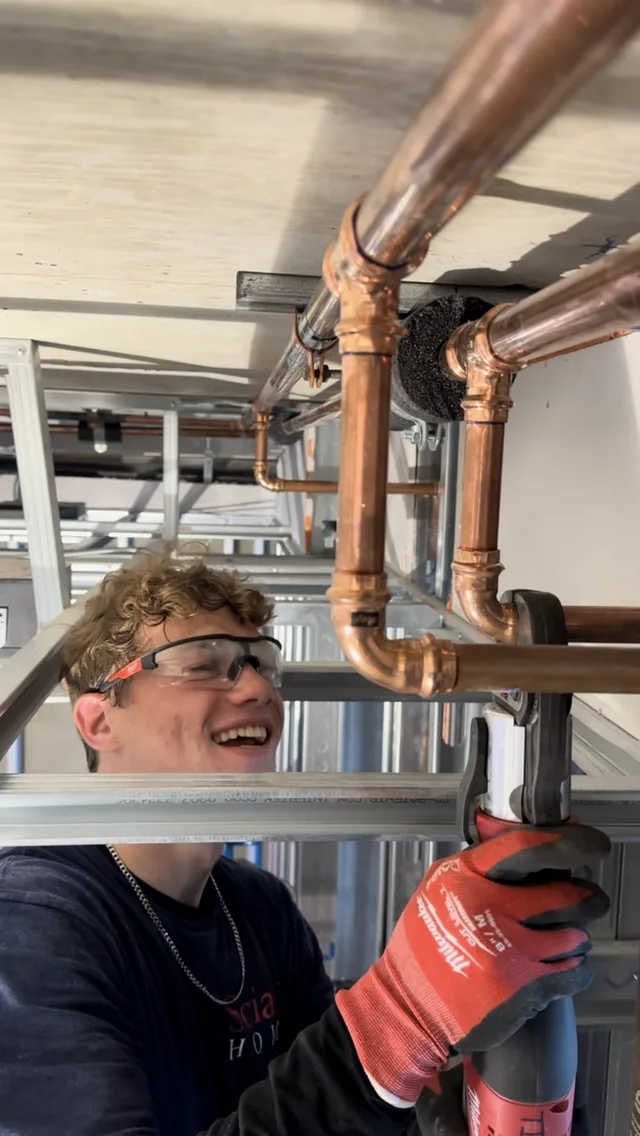
We pull the permit, install the new piping cleanly, and connect it to your fixtures.
The new system is tested and inspected before the job is closed out.
★★★★★
Read full review on Google (opens in a new tab)“…Bryan and the crew were professional, honest, and took the time to do the job the right way without cutting corners. Communication was excellent, they arrived on time, and were pleasant to be around during the project. Their attention to detail and pride in their workmanship were evident in every aspect of the finished product. …”
FAQ
Repeated leaks in different locations, corroded galvanized pipe, polybutylene pipe, or low pressure throughout the house are the most common signs. An assessment will tell you whether a full repipe, a partial repipe, or a targeted repair is the right choice.
A full repipe replaces all of the home’s water supply lines. A partial repipe replaces a specific section, such as a line that runs under the slab or a branch with repeated leaks. Partial repipes can be a smart choice when the rest of the system is in good condition.
We work with both copper and PEX. Each has advantages depending on the home, the routing, and your budget. We’ll explain the options for your house during the assessment.
Yes. Repiping is permitted work. As a licensed plumbing contractor, we handle the permit and the required inspections.
Related Services
Methodical troubleshooting when the cause is not obvious and you need a real answer.
Leak detection services
Toilets, faucets, shower cartridges, valves, hose bibbs, leaks, and everyday repairs.
Plumbing repair services
Repair, replacement, troubleshooting, and installation for tank and tankless systems.
Water heater servicesRequest Service
Start with an assessment. We’ll look at your existing piping and explain whether a full or partial repipe makes sense for your home.